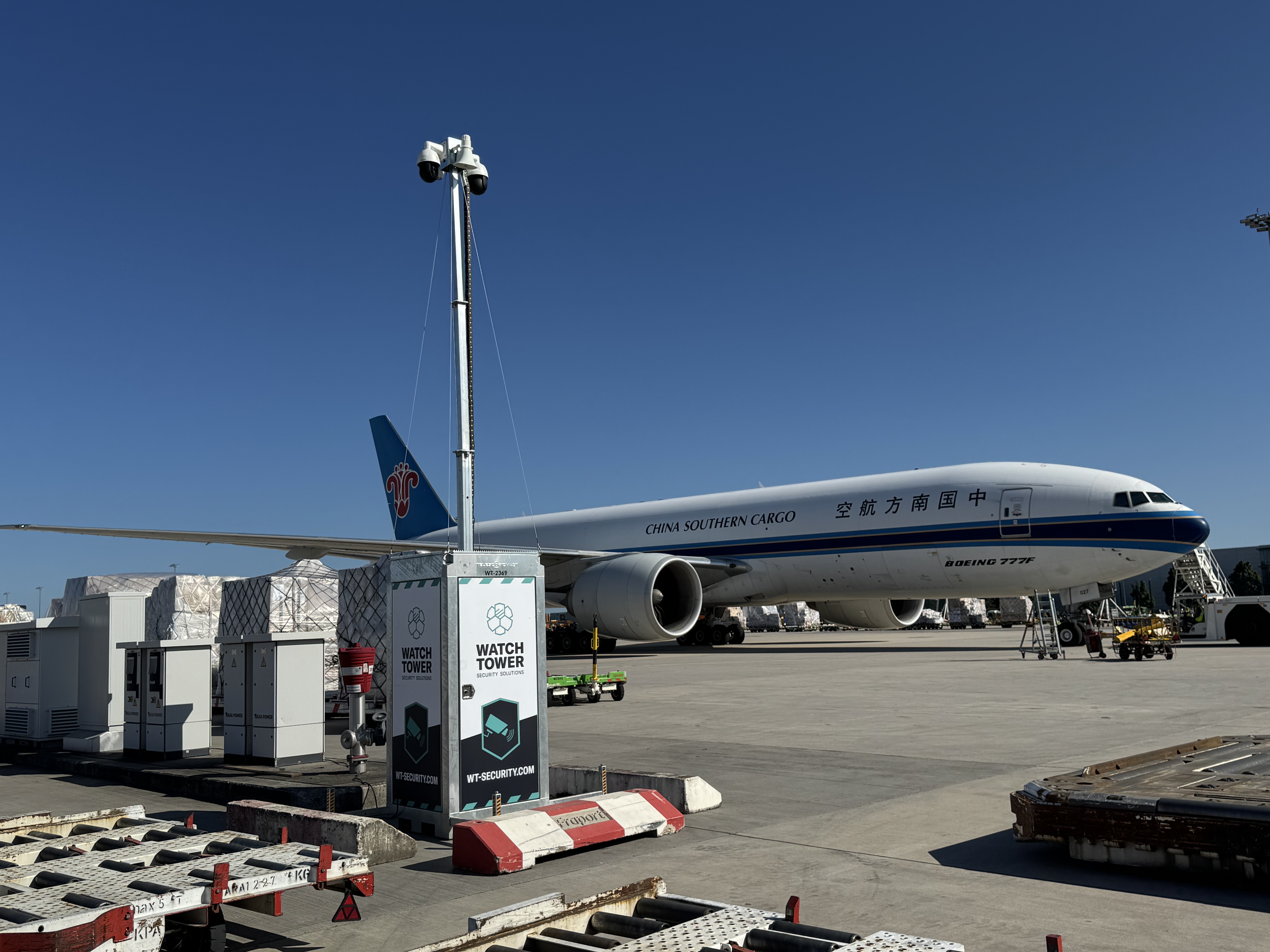
CCTV surveillance is no longer permitted for critical infrastructure
The European CER Directives and intelligent mobile CCTV solutions
Critical infrastructure in Europe faces a rapidly changing threat landscape. Geopolitical tensions are rising, hybrid attacks are becoming more complex, and terrorism remains a threat. At the same time, pressure is mounting from European regulations to better protect this infrastructure. For organisations such as airports, seaports, energy companies, railway operators and drinking water suppliers, physical security is therefore no longer an operational choice, but has become a legal obligation. CCTV surveillance plays a central role in this. Not as a supporting tool, but as an essential part of compliance and operational resilience.
The CER Directive: security as an obligation, not a choice
With the Critical Entities Resilience (CER) Directive, the European Union has laid down clear requirements for the protection of critical infrastructure. Organisations are required, among other things, to:
Analysing risks such as terrorism, sabotage, insider threats and geopolitical threats
Implementing appropriate technical and physical security measures
Providing perimeter security and continuous monitoring
Ensure the continuity of essential services, even in crisis situations
In practice, this means that ‘keeping track of what is happening on your site’ is no longer an operational luxury, but a formal part of compliance. Without observation, there is no control. Without control, there is no resilience.
Mobile CCTV as a flexible security layer
Mobile CCTV towers and camera boxes offer a practical and rapid solution here. They make it possible to set up fully operational perimeter surveillance at short notice, without relying on permanent infrastructure.
Typical applications include:
Bridging the gap during projects
When a fixed installation is still under development, mobile CCTV ensures there is no period without security.
Temporary replacement during maintenance
During upgrades or maintenance of existing systems, surveillance remains active, with no blind spots.
Permanent solution at complex locations
In places where cabling is not feasible, mobile systems offer an alternative that can still provide full coverage.
Case studies: airports and seaports
This approach is already being used in some of Europe’s most critical environments. A leading European airport and a major seaport are using Watchtower’s temporary CCTV solutions to maintain camera coverage whilst their permanent systems are being upgraded. In both cases, the key requirements are the same: rapid deployment, high reliability and integration with existing security operations.
More than just cameras: from live footage to intelligent alarms, all within your own VMS
Modern surveillance towers are much more than just "cameras on a pole". Watchtower's systems are used for:
Live monitoring and forensic playback analysis
Alarm detection and intervention from the control room when people or vehicles enter a secure zone during alarm periods
Importantly, these systems can integrate with existing Video Management Platforms, including Milestone VMS. This allows operators to:
Work within their familiar VMS environment
Combine temporary and fixed cameras in a single interface
Avoid standalone or isolated solutions
Would you like to discover how temporary or mobile camera surveillance can support your strategy regarding critical infrastructure, CER compliance or planned upgrades?